
 English
 русский
 عربى
عربىContent
- 1 Butt Fusion Fittings
- 2 Electrofusion Fittings
- 3 Mechanical Fittings
- 4 Injection-Molded vs. Fabricated Fittings
- 5 Transition Fittings for Connecting HDPE to Other Materials
- 6 Specialty Fittings for Specific Applications
- 7 HDPE Fitting Material Grades and Standards
- 8 Choosing the Right Fitting Type: A Practical Guide
HDPE pipe uses a wide range of fittings including butt fusion fittings, electrofusion fittings, mechanical fittings, and injection-molded fittings — each suited to specific pressure ratings, pipe sizes, and installation conditions. The choice of fitting type directly affects joint integrity, installation speed, and long-term system performance. Understanding which fittings work with HDPE is essential for engineers, contractors, and procurement teams working on water, gas, irrigation, and industrial piping systems.
Butt Fusion Fittings
Butt fusion is the most widely used joining method for HDPE pipe in large-diameter applications. The process heats both the pipe end and the fitting face to a controlled temperature (typically 400–450°F / 204–232°C), then presses them together under precise fusion pressure to form a homogeneous, leak-free joint.
Common Butt Fusion Fitting Types
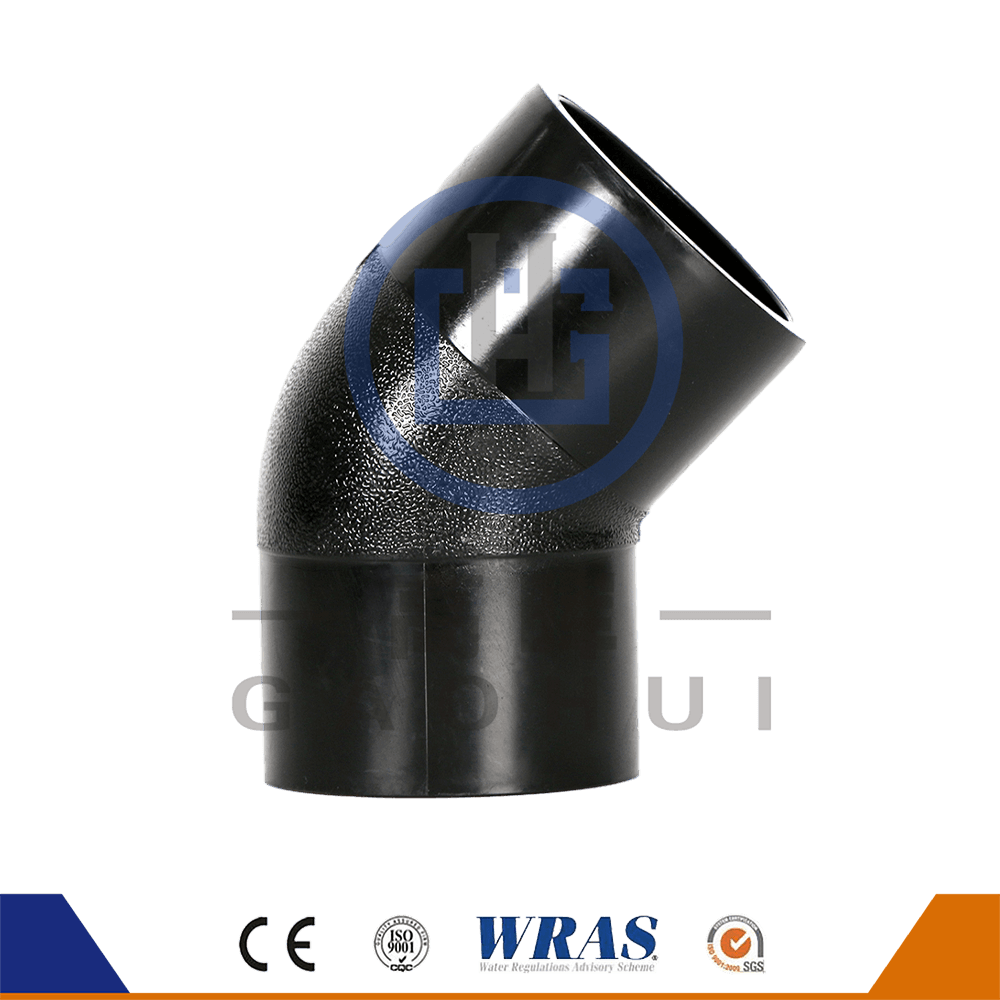
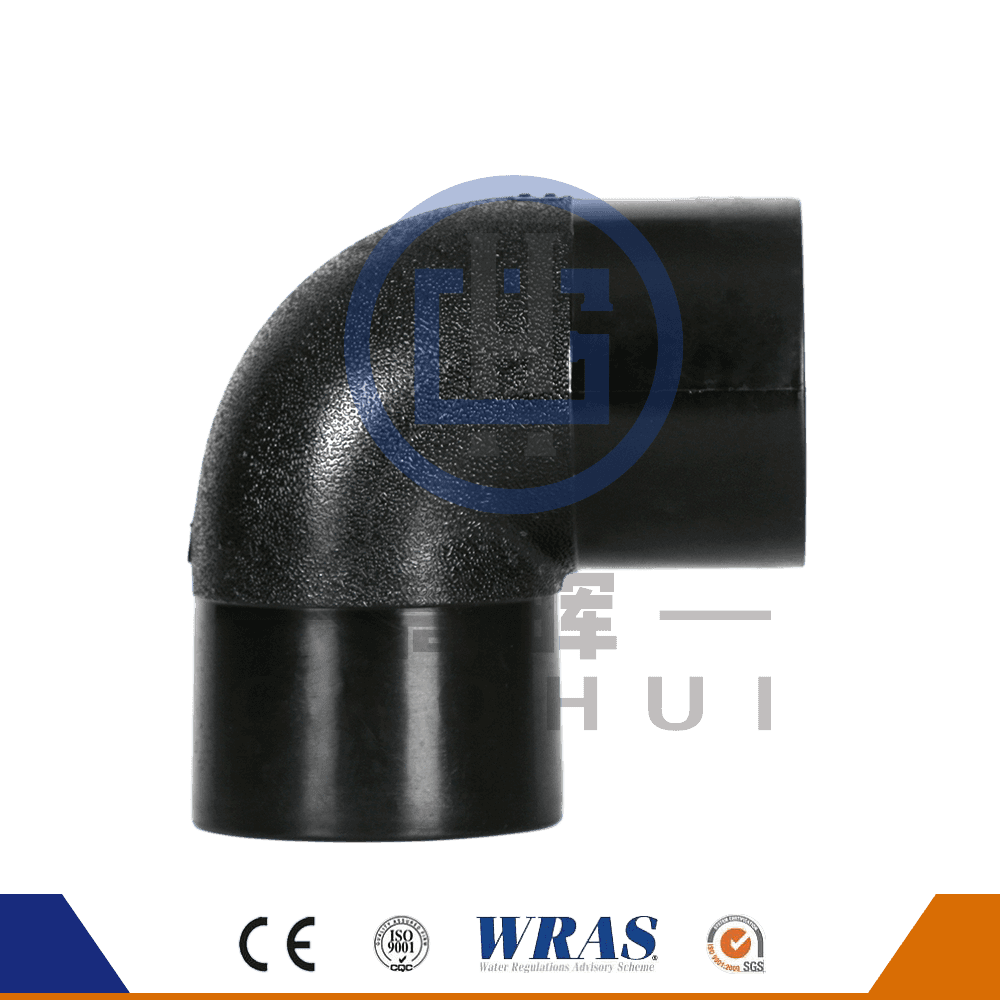
- Elbows (45° and 90°) — used to change pipe direction in transmission mains and distribution lines
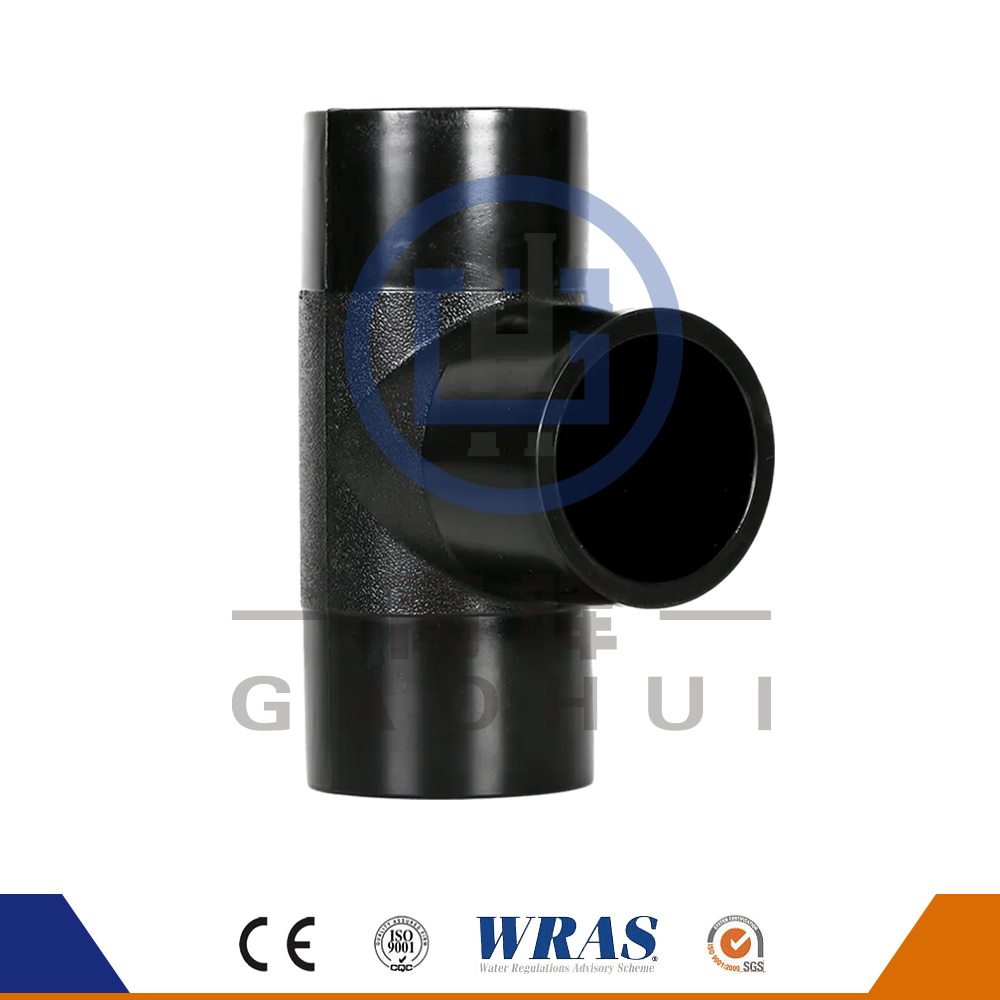
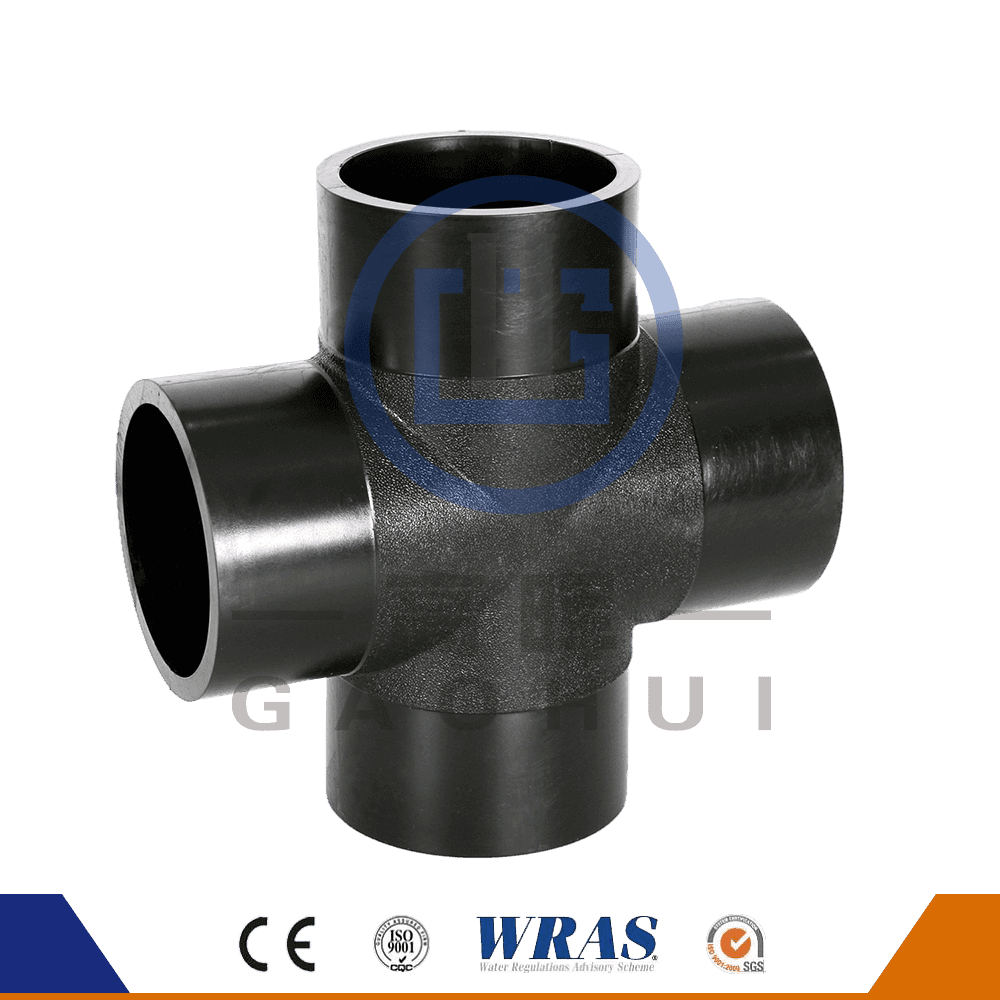
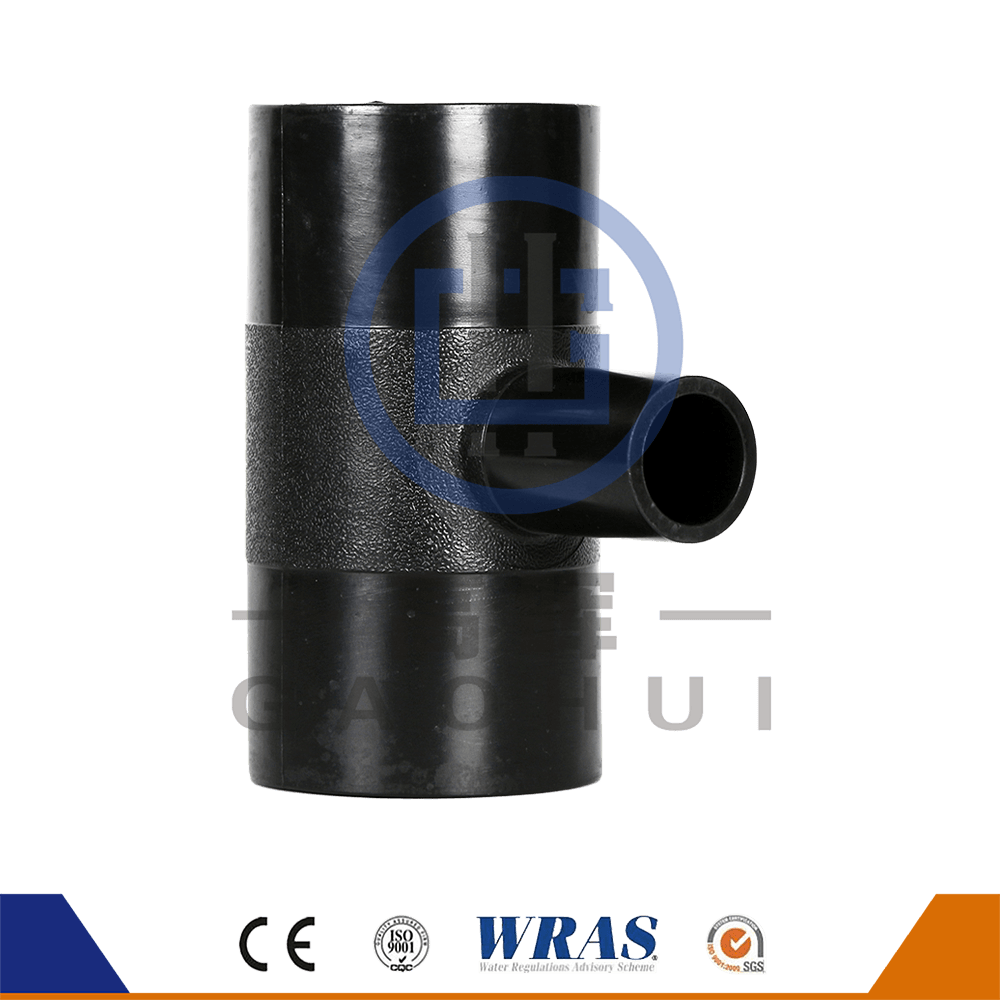
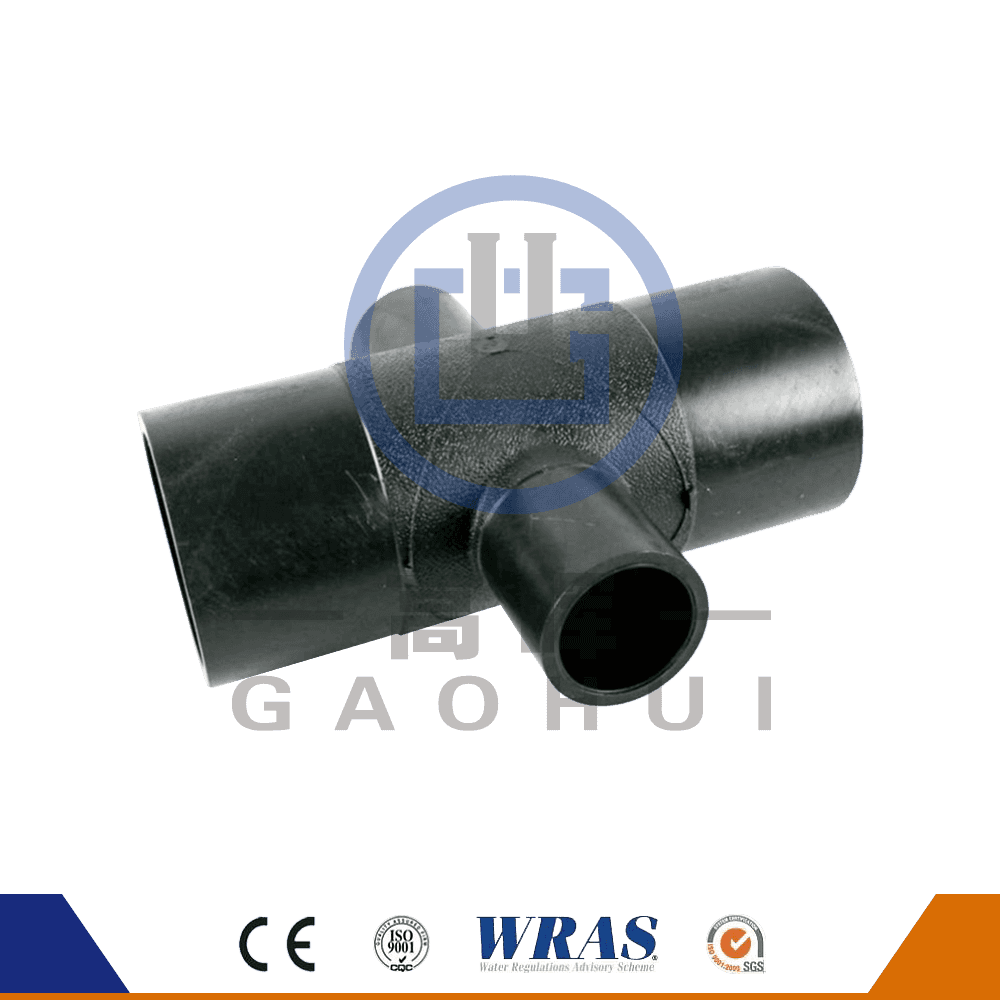
- Tees (equal and reducing) — for branch connections in water distribution and industrial process lines
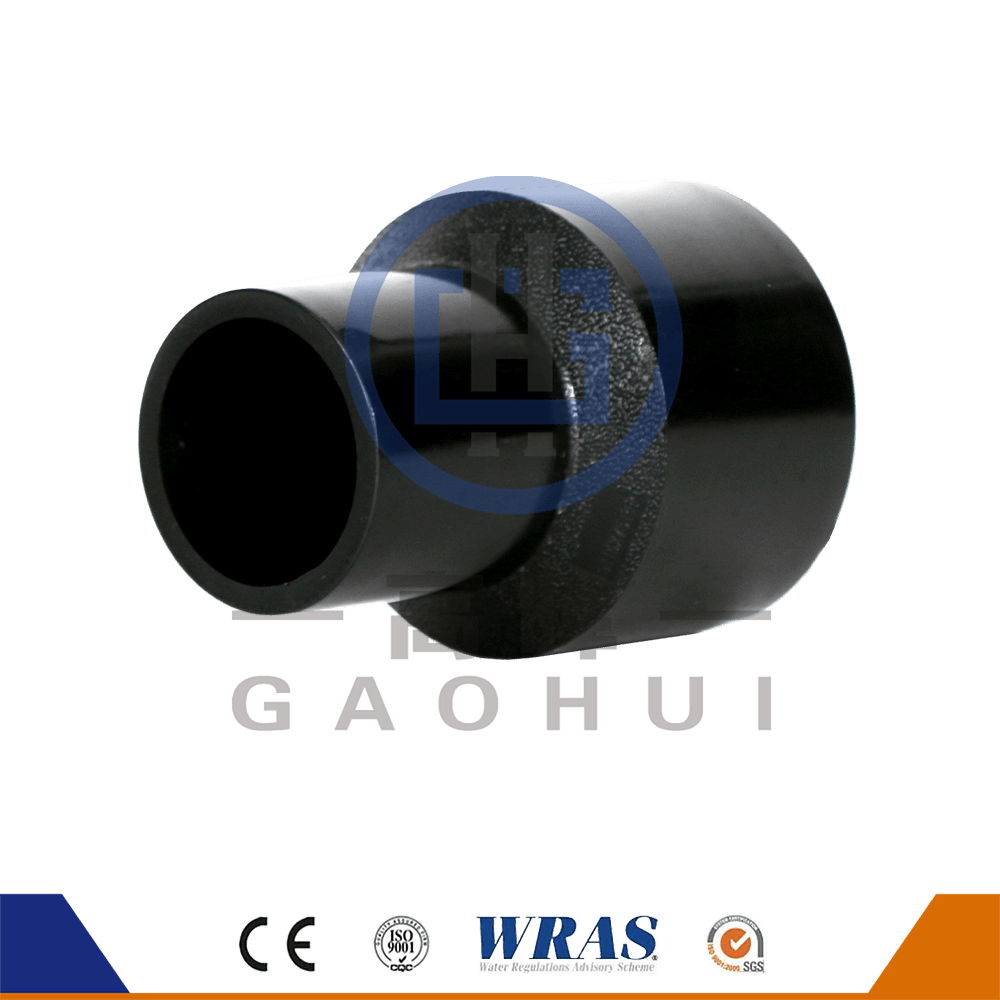
- Reducers (concentric and eccentric) — transition between different pipe diameters
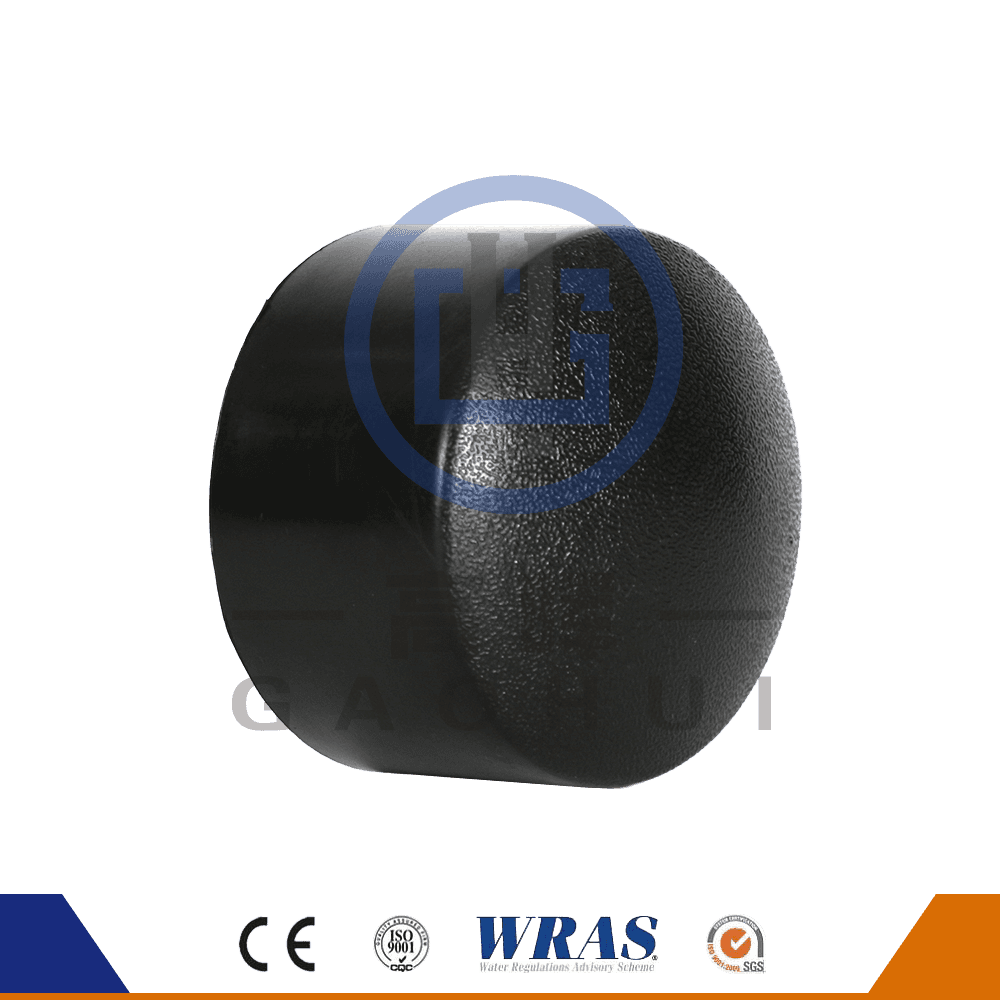
- End caps — seal the ends of pipe during pressure testing or permanent termination
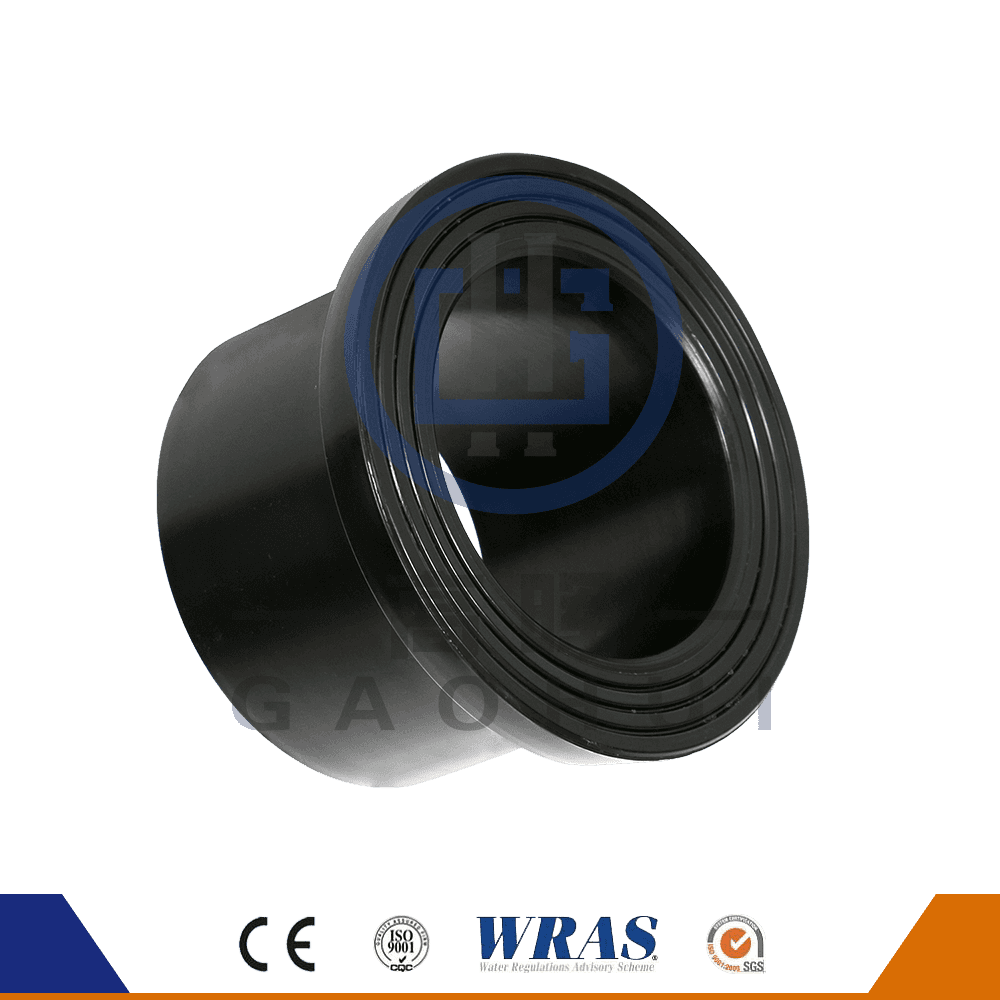
- Stub ends / flanged adapters — connect HDPE to flanged metallic components
Butt fusion fittings are manufactured to ASTM D3261 and are available from ½ inch (IPS) up to 65 inches in diameter. The resulting joint strength equals or exceeds the pipe wall itself, making it ideal for high-pressure gas mains and water transmission lines rated up to DR 7.3 (333 psi HDB).
Electrofusion Fittings
Electrofusion fittings contain embedded electrical resistance wire. When an electrofusion controller passes current through the wire, the fitting interior and pipe exterior melt and fuse together. This method is preferred when space constraints or misaligned pipe make butt fusion impractical.
Key Electrofusion Fitting Types
- Couplings (straight and reducing) — the most common electrofusion fitting; joins two pipe ends in tight spaces
- Elbows (45° and 90°) — directional changes where butt fusion equipment cannot be positioned
- Tees — branch connections in confined vaults or trench boxes
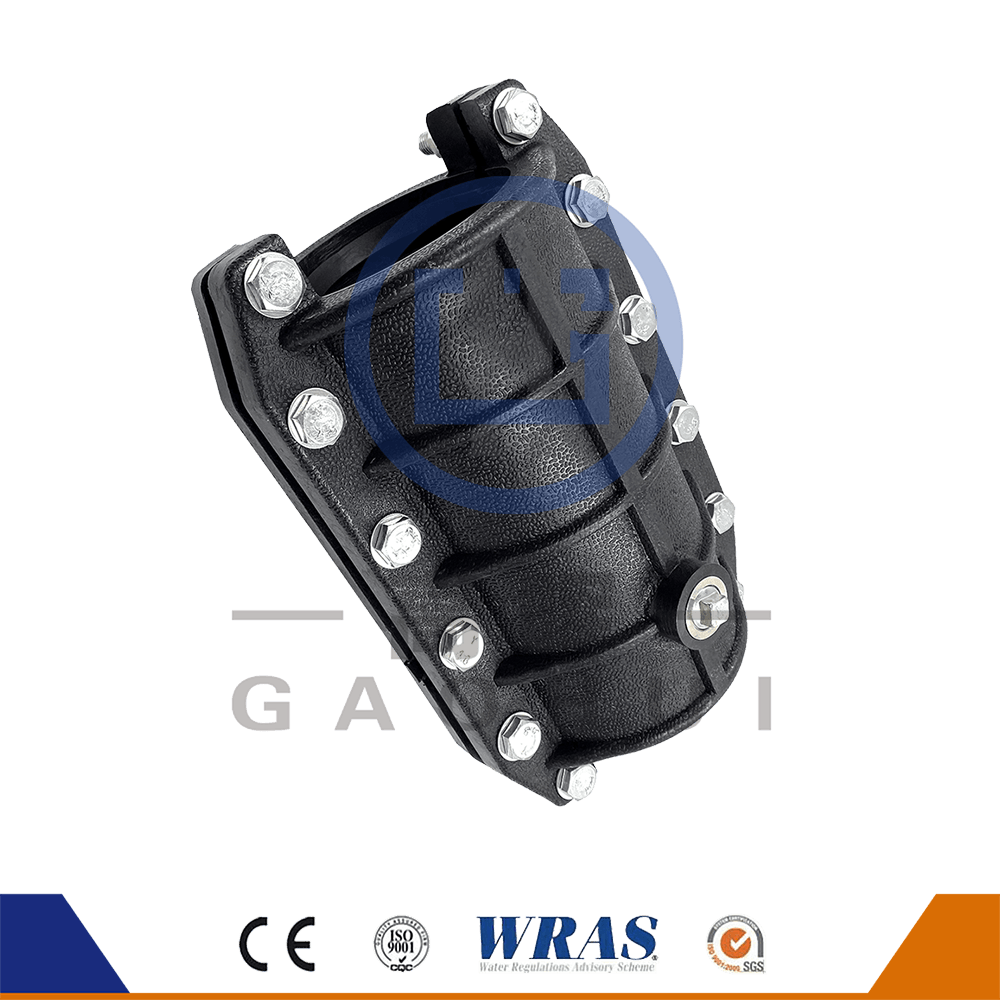
- Saddle tees (branch saddles) — tap into existing live mains without cutting the pipe, used extensively in gas distribution
- End caps — pressure-rated terminations
- Repair couplings — longer couplings for making repairs mid-pipe without pipe replacement
Electrofusion fittings comply with ASTM F1055 and are available from ¾ inch to 24 inches. Fusion time varies by fitting size — a 2-inch coupling fuses in approximately 45 seconds, while a 12-inch coupling may require over 10 minutes at 40V. Each fitting carries a unique barcode that programs the electrofusion controller automatically, reducing operator error.
Mechanical Fittings
Mechanical fittings do not require heat or special equipment, making them the fastest installation option for repairs, temporary connections, or transitions between HDPE and other pipe materials (PVC, ductile iron, steel). They are divided into several sub-categories based on their gripping and sealing mechanism.
Compression Fittings
Compression fittings use a nut, body, and sealing ring to grip and seal the outside diameter of the pipe. They are widely used in agricultural and residential applications for ½ inch to 2 inch HDPE tubing (PE 4710 or PE 3408). Examples include insert fittings with barbed ends used in drip irrigation and poly tubing systems. Standards: ASTM D2609.
Mechanical Joint (MJ) Adapters
MJ adapters allow HDPE pipe to connect to ductile iron or cast iron fittings using a standard mechanical joint bell. They require a stainless steel stiffener insert to maintain the HDPE pipe OD under bolt load. Available from 4 inch to 48 inch, compliant with AWWA C111.
Flange Adapters and Backup Rings
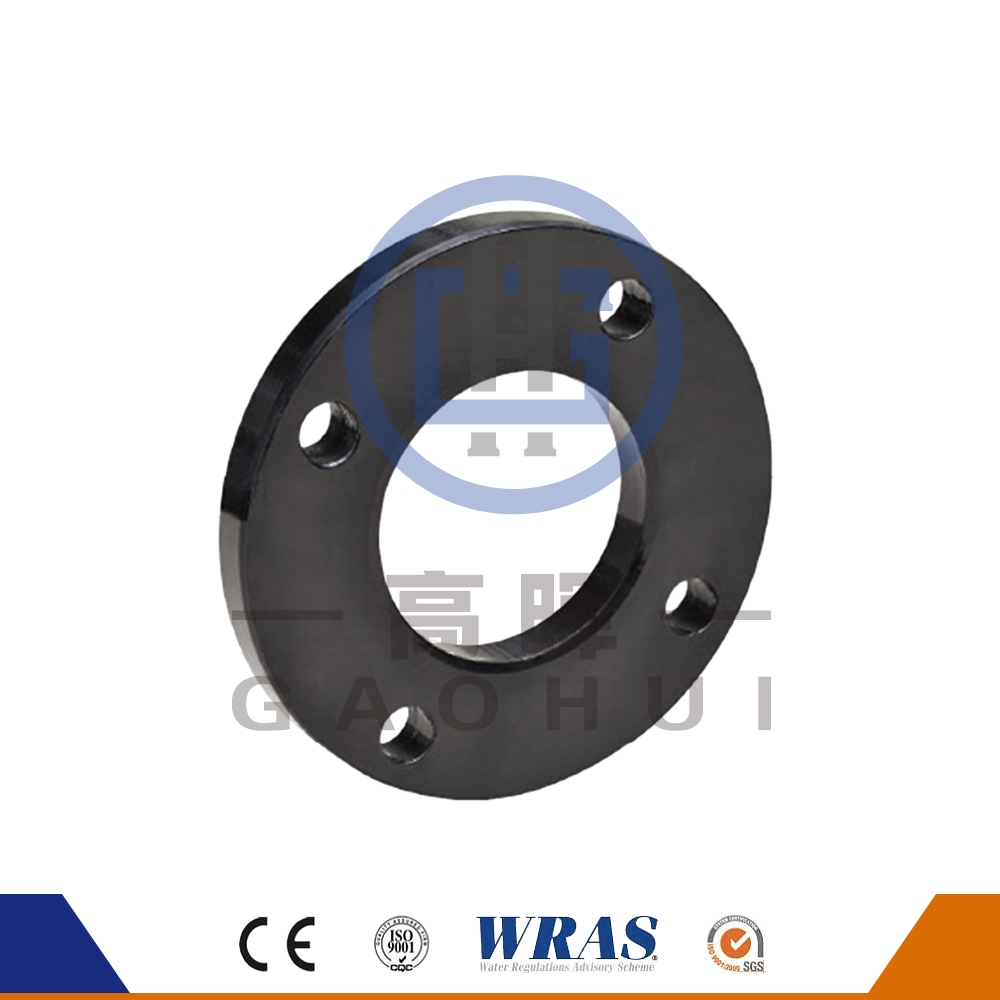
A flange adapter is butt-fused to the HDPE pipe end; a loose steel or ductile iron backup ring then allows bolting to ANSI/AWWA flanged valves, pumps, or equipment. This is one of the most common transition methods for pump stations and water treatment plants. Rated for pressures matching the HDPE pipe's DR rating, up to 200 psi in most DR 11 configurations.
Stab-Type / Push-Fit Fittings
Push-fit fittings feature internal stainless steel grab rings and EPDM o-rings. The pipe is simply pushed into the fitting body; the grab ring locks it in place. Used for quick repairs and service connections in ½ inch to 4 inch HDPE. Products like the Georg Fischer Plasson range and John Guest SpeedFit fall in this category.
Injection-Molded vs. Fabricated Fittings
HDPE fittings are manufactured by two fundamentally different processes, each with distinct performance implications:
| Parameter | Injection-Molded | Fabricated (Mitered) |
|---|---|---|
| Size range | ½" – 12" typical | 4" – 65" |
| Wall consistency | Uniform, no weld lines | Butt-fused segments; weld beads present |
| Pressure rating | Full pipe pressure rating | 0.80 × pipe pressure (20% derating typical) |
| Lead time | In stock / short lead | Made-to-order; 2–6 weeks typical |
| Standard | ASTM D3261 | ASTM F2206 |
For critical high-pressure applications above 12 inches diameter, fabricated fittings are the practical choice, but engineers must apply the 0.80 pressure derating factor per ASTM F2206 and relevant design standards.
Transition Fittings for Connecting HDPE to Other Materials
Piping systems rarely use a single material throughout. HDPE must frequently connect to PVC, ductile iron, copper, steel, or CPVC. Several standardized transition fittings address these needs:
- HDPE-to-PVC couplings — use a stainless steel grip ring mechanism; available for 1"–12" IPS
- HDPE-to-copper transition inserts — barbed or compression design for ½" and ¾" service lines
- Threaded adapters (MPT/FPT) — male or female NPT threads fused or molded onto the HDPE spigot; used for meter connections and service valves
- Dresser-style couplings — split sleeve mechanical couplings accommodating both HDPE OD and ductile iron OD in a single body for emergency repairs
- Grooved-end adapters — fusion-attached Victaulic-compatible grooved ends for connecting to grooved mechanical piping systems
Specialty Fittings for Specific Applications
Beyond standard configurations, HDPE systems rely on application-specific fittings:
Saddle Fusion Fittings
Saddle fittings are heat-fused directly onto the outside of an existing HDPE main to create a branch outlet — without cutting the main. They are used in gas distribution for service line tie-ins and in municipal water for meter connections. ASTM D2683 governs socket-type saddles. A key advantage: the main remains pressurized and in service during the tap.
Reducing Tees and Wyes
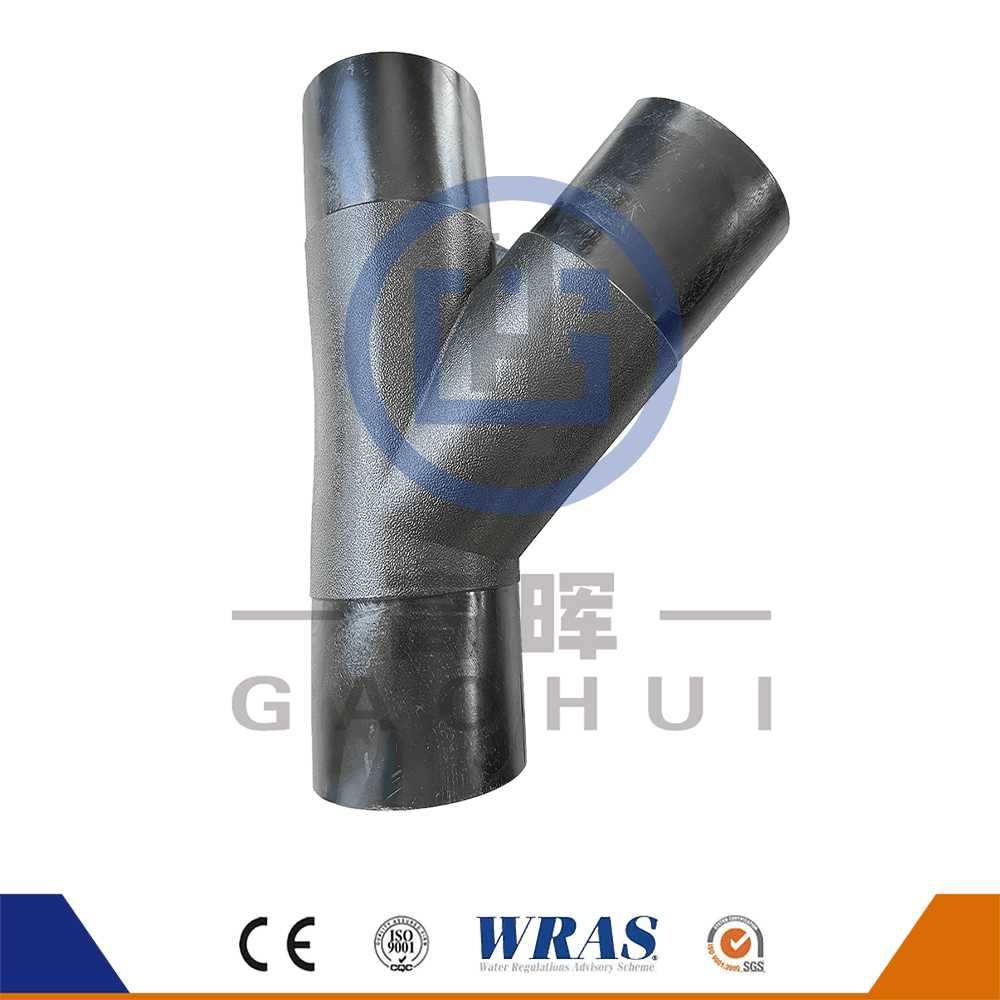
Wye fittings (45° lateral branches) are used in gravity sewer and stormwater HDPE systems to reduce turbulence at junctions. They are typically fabricated from HDPE sheet or segments and comply with ASTM F714 for profile wall pipe applications.
Ball Valves and Valve Integration Fittings
HDPE full-port ball valves with fusion ends are available from ½ inch to 12 inch, allowing inline valving without introducing metallic components — critical for aggressive chemical service. The valve body is fabricated from PE 4710 resin and is directly butt-fused into the pipeline.
Anchor Tees and Restraint Fittings
In HDPE force mains and directional-drilled installations, anchor tees provide structural attachment points to concrete thrust blocks. They are fabricated with gusset plates welded to the tee body, transferring longitudinal pipe forces into the structure.
HDPE Fitting Material Grades and Standards
Not all HDPE fittings are interchangeable. Material grade must match or exceed the pipe grade to ensure compatible fusion. The dominant resin grades in use today are:
| Resin Grade | HDB (psi) | Common Fitting Use |
|---|---|---|
| PE 3408 | 1,600 | Legacy water/gas distribution fittings |
| PE 4710 | 1,600 | Current standard for pressure fittings (AWWA, gas) |
| PE 100 | 1,600 (MRS 10 MPa) | International standard; ISO 4427 / ISO 4437 fittings |
| PE 100-RC | 1,600 (enhanced SCR) | Trenchless / no-dig applications with point loading |
Key applicable standards include: ASTM D3261 (butt fusion fittings), ASTM F1055 (electrofusion fittings), ASTM D2683 (socket fusion fittings), ASTM F2206 (fabricated fittings), and AWWA C906 (fittings for water mains 4 inch and larger).
Choosing the Right Fitting Type: A Practical Guide
Selecting the appropriate fitting type depends on several project-specific factors. Use the following decision framework:
- Pipe diameter: Under 12 inches — injection-molded butt fusion or electrofusion preferred. Over 12 inches — fabricated fittings or large-diameter electrofusion saddles.
- Access and space: Confined vaults, directional drill pits, or live-service tie-ins — use electrofusion. Open trench with equipment access — butt fusion.
- Material transition: Connecting to ductile iron, PVC, or steel — use mechanical transition fittings (MJ adapters, flange adapters, or compression couplings).
- Pressure rating: High-pressure gas or water transmission (above 150 psi) — butt fusion or electrofusion fittings with full pressure rating. Low-pressure irrigation — compression or insert fittings acceptable.
- Emergency repair: Push-fit or Dresser-style mechanical couplings for rapid restoration without fusion equipment.
A properly fused HDPE joint is stronger than the pipe itself — pull-out tests on DR 11 butt fusion joints consistently show failure in the pipe wall, not the joint. This is one of the primary reasons HDPE with fusion fittings is specified for seismically active zones and trenchless installations where ground movement places axial stress on the pipeline.